Tuesday, November 12, 2013

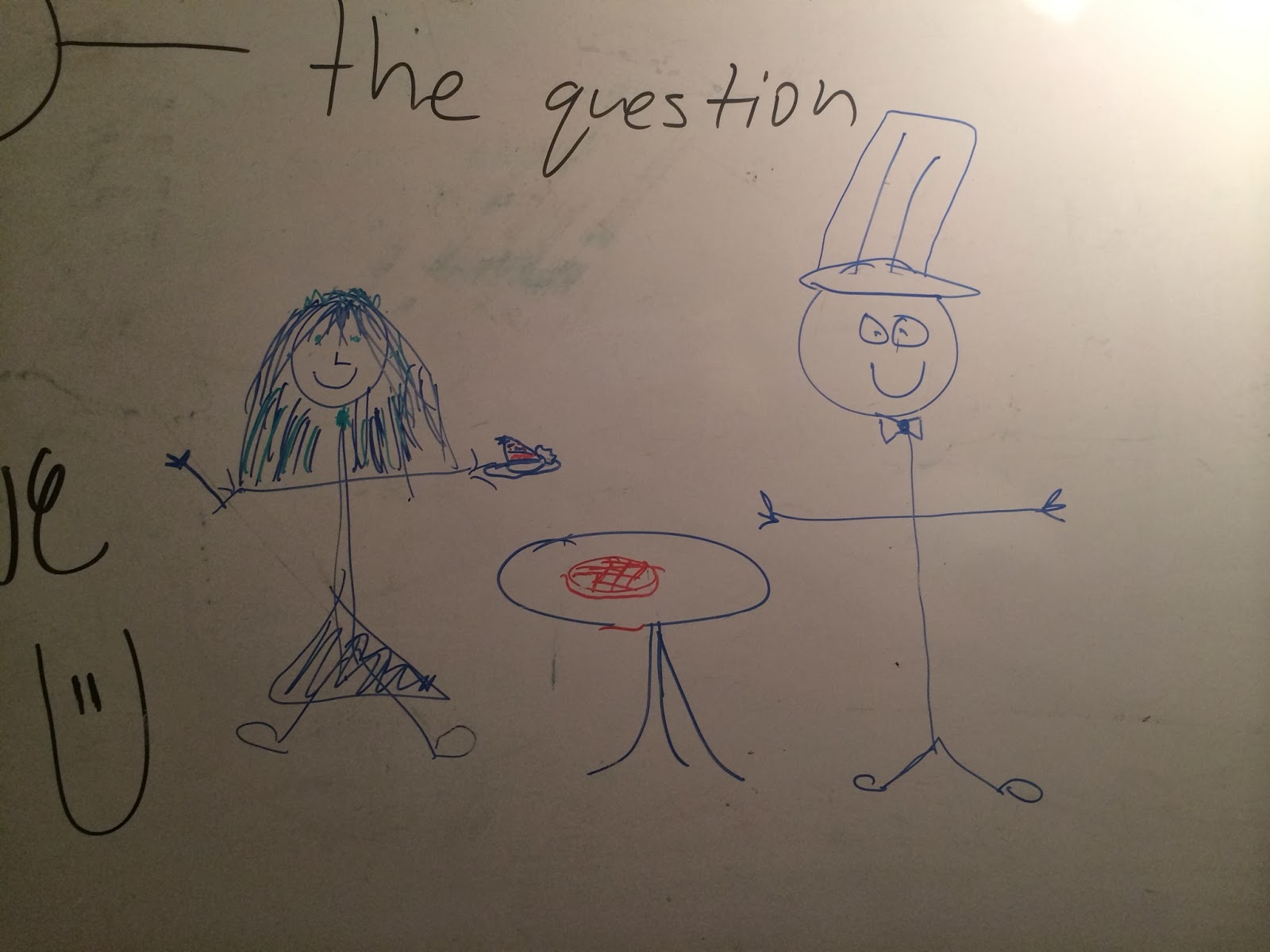
I do I do I do

More than 6 months have now passed since I've returned home from Jerusalem.  I'm not going to lie, the last few months have been brutal, solitary, and above all lonely.  Although I will always miss beloved Jerusalem,  I no longer miss the life I had in there.  It would be pretentious to say that I've grown since then.  We always grow.  If its not growing up, its growing older.  Growing just implies time has passed.  My purpose isn't to learn anymore - its to do something meaningful with what I've learned.  And in that there is usually more learning than our traditional learning methods.  

I don't believe I've worked harder since high school these last couple of months.  I often had 12 hour days at the restaurant in which I worked, only to see myself break even over the Summer - I finally paid off my $3,000 debt from a bad business venture.  It wasn't wasted, but after it was all over I wondered if it was worth the effort knowing that I would make 4 times that this upcoming Summer.  

As a short aside, I have often lamented my social situation.  While not all my friends come from affluent backgrounds, there is a good number who hail from more than friendly economic terms (aka their parents are millionaires).  Despite my lack of resources, we do the same things.  We hang out, we eat food, we hate studying, and have ambitions.  We are all essentially the same.  Most of them don't know that I'm broke and that my family has their whole lives.  I am grateful for a society that values people for a people for what they do far more from what social class they are from.  

You can take the Jerusalem from a Man,
but you will never take a Stratford from him

I've discovered a newfound simplicity in child-like activities


Hermana Lance. I'm so excited for her to finally be serving.  I always knew she would be a Sister someday.  She just fit the role.  

The next part of my life is to do what I've planned so far.  Within the next year in a half, I should have all of the important decisions locked down: whom to marry, a career, what kind of car to buy? As I move more towards the impending end of planning into the superlative lifestyle planned, the more and more I realize the need to do.  Thinking has gotten me this far, and doing is the only way to get me to the radiant utopia I've been dreaming of.  

My moniker for this phase of my life: I do I do I do

Monday, September 16, 2013

The Best Investment

I have a good friend on a mission.  I have a few good friends on missions.  Last Summer I met a guy named Zach Dawdy.  Once every few months I meet guys who inspire me.  Zach is a design guru.  He taught me the principles of design, which are very similar to the principles of organization.  He inspires me, to say the least.  You know when you find someone who just knows how you tick?  He's one of those friends.

So I wrote him last week complaining about how I just want to graduate, how I'm done with school, etc.  He wrote back with this:
"they were talking about taking moments to slow down and enjoy quality time with others and doing other things than (we'll say) "work" in the American society view of things. They talked about how they couldn't imagine the Savior running from appointment to appointment, constantly in a rush, and always being "busy". And so I imagine for us that we should be following the example of the Savior (imagine that, haha). And so, in following His example, we will have times to rest and enjoy other aspects of life, such as developing our talents (we had that lesson in our Sunday school class this past week), spending time with loved ones, and serving others. I always like to imagine that it's easy to "work" and "be busy". We can fill our days with things that will take up our time. But it's more important for us use our time wisely and do the things that matter most. And so it goes from work and being busy to working smart (and effectively) and being productive. 

There have been times when I've wanted to go and just do stuff, skip the studies, whatever. But as I think about it, will I really be effective without my study? Ummm, answer: definitely not. And so I have to think for the future and not just the moment. And so Ben, if you are excited to get out of BYU and have more opportunities to help other people find joy and happiness, what are you doing now to prepare yourself for that point? If you don't read your scriptures (as often as you know you should), do you feel that you will be able to help those people as effectively as you most definitely will be able to in studying them everyday? Something that I've been seeing a lot recently is that really our incentives should be in helping others, not just in helping ourselves. That's where true happiness comes from. And so, if you want to be able to help others, sometimes it comes in the form of helping ourselves, but just so that we will be that much more able to help them. And so it always goes back to them."


From his advice I decided to make a list of things that matter most to me.  So here it is.  

1)  Truth

So most people would put God first.  God became God because he was subject to the laws of truth.  Thus, if God ceased to be God, truth would still exist.  Would I still exist though?

2)  God

So He's helped me more than anyone else.  He loves me better than anyone else.  So obviously He gets the top spot. 

3)  My family

So this is kinda an abbreviated list.  Right now I would do anything for my family, and I know I'm only going to love my family in the future more than I know now.  I wouldn't trade my current family for any other one, and I'm excited to expand here in the future.  I was talking to my boss the other day and I remembered a quote from somewhere that said "Of all the titles God could choose, Father is the one most important to Him."  Becoming a father is one way I'll come closer to my #2.  I love how all of these are interconnected.  

4)  God's family

No matter how much I find finances and computer programming interesting, communicating with others is what always makes me happy.  After everything is all said and done, my family is in pretty good shape.  My parents are still together, my older siblings are happily married, we're all in college and things are going well.  With everything else in order,  the next best thing I, or anyone can do, is help God with his #1 - or maybe its His #2.  Whatever the case, His purpose is to "Bring to pass the immortality and eternal life of Man."  We're pretty important to Him. And if we're all that important to Him, I think we should all be pretty important to me.  Since my mission I've been investing my time to prepare to go and serve God's children again.  It feels like it's taking forever, but I know I'll get there someday.  And since everything else is going well, this is where I'm investing most of my time at the moment.  And this is where I'll be investing most of my free time for this life.  And it's going to make me really happy :D 

Sunday, September 1, 2013

As It Begins Again

Throughout my life I have always meddled in new things.  I love exploring the far reaches of set boundaries, yet I enjoy the refined class of the civilized life as well.  I don’t know what creates that split character of mine, but I do know that it creates a unique personality.  I can fit in with everyone, yet I don’t really mind not fitting in either; it really depends on the occasion.  Its really quite quaint, once you get to know me, but to get to know me you have to make an effort, because heaven knows that I can move through relationships like pacman in a maze.


As I begin this new school year, I think I finally have it figured out.  I know where I’m going, at least where I want to go.  I’ll get to the schools, eventually.  You see, I have this coworker.  He happens to be a Mexican named Juan.  Juan and I developed this idea that stemmed from a desire to start teaching English to Spanish speakers here in the States.  We will first start with some sit-down lessons, move to computer curriculum (kinda like Rosetta Stone), establish English teaching schools outside of the U.S. and take it from there.  

One thing I miss - the philosophical curiosity that led me to investigate the truth.  It's been a while since I've looked into something I didn't know.  I think there is a dichotomy between thinking and doing.  Before when I could think, I couldn't do so much.  Now that I don't think so much, I'm doing alot more.   I think school will put me in a more pensive mood, but I also need to do more now that I'm about to start a career.  My ideas now seem less and less world-changing, but more and more practical.  Whatever happens, I know there is one thing that I want to do - revolutionize education.  

Monday, July 29, 2013

What I Know Now


My best friend is going to be entering the MTC this week.  I was listening to a discussion on the Mormon Channel of YouTube between Elder Christofferson and an interviewer about Elder Christofferson's mission.  The interviewer posed a simple question: "What did you know at the end of your mission that you didn't know at the beginning?"Elder Christofferson had the unique experience of having Elder Richard G. Scott as his mission president. Elder Christofferson answered the question eloquently, yet not as succinctly as I think he would have desired. As I thought about the same question, I decided I should make a list so I can be prepared when I am asked that question.


1. The difference between culture and truth

The best example I have for this is marriage.  In South America, most countries require couples to be married civilly, and so a religious ceremony does not constitute a legal marriage.  The idea was foreign to me as an American because only gay couples are married by a judge in the States.  Even non-religious couples get married by a preacher or pastor of some sort, even in weddings outside of a church or temple. Because the Church of Jesus Christ of Latter-Day Saints recognizes government in all locations, investigators living with an opposite sex with whom they were not married were required to marry before baptism.  Although apparent as a youth, the obvious difference between temple marriage and civil marriage became more apparent.  Any marriage performed outside of the temple is temporal, null and void at death. Besides legal benefits and social standards, a civil marriage has no bearing.  In other words, a private company that endorsed and enacted marriage would have as much power as the government.  Anything that the government decrees about marriage is not truth, but rather culture.  True marriage is performed through the ordinances and authority that resides with the Priesthood in the temple. Luckily here in the States culture has adpoted truth as far as marriage goes (we have a ways to go with the rest of the law of chasity) and so most marriages expect committment, love, respect, and a mother and father for children.  

2. Repentance

I didn't really have to deal with repenting in the stereotypical sense.  I never really did anything "wrong" and so I never had to make anything "right."  I discovered halfway through my mission that repentance was a two-part process.  Indeed, unrighteous actions must be made right, but just as important as fixing sins of commission is repenting of our sins of omission.  In His loving kindness, God prepared a way for man to continually need repentance.  Repenting of sins of commission helps prepare a person for repentance from sins of omission because the process for both is the same and involves the steps of the gospel.  In both cases, desire is the first step to change.  Almost immediately after the desire, hope and faith are needed to progress to the next step of action.  The action resulting from faith is the part of repentance AND THIS IS THE MOST CRUCIAL STEP because faith without works is dead.  

3. Patience

An integral part of success in life involves patience. Patience is not equivalent to waiting.  Patience, as defined by President Deiter F. Uchdorf, is active, not passive.  So although I am naturally a patient person, especially in my relationships with others, I had to learn a new dimension on my mission.  I knew what I wanted, and even though I did not get what I want right away, I continued working.  At the end of my mission I don't think I ever felt like I achieved all that I wanted to, and I am extremely glad for that.  If I had acheived what I desired, I don't think I would have continued working as hard as I did.  Patience is working while waiting.  

4. Being Supportive


I've always been ready and willing to try new things, like corn on pizza (which is actually pretty good).  As a missionary, however, I realized that leaders occasionally suppress other's desires to try new things. Take, for example, my companion Kyle Lane.  We were together for an extended period of time, and quite honestly the missionary work in our area wasn't the greatest.  The only thing that kept me from going crazy was his company. He had alot of ideas that I thought might be a little strange: writing down every door we stopped by, knocking on doors of rich people, but all in all it was simple stuff that every missionary should be doing.  I didn't think anything would work, but from my previous companion I learned anything was possible. With all of his ideas I decided that I would at the very least stay out of his way and not say anything negative.  Now, I can't say that we had amazing success, but we are going to be roommates this fall and we are still the best of friends.   I did hear that one of his ideas, keeping a record of all the people we stopped by, helped future missionaries in the area find people to baptize.

The second part to this lesson is supporting a leader even when I didn't agree with his decision making.  In one of my last areas, I had a bishop who was vehemently opposed to baptizing anyone who wasn't a perfect member.  I never felt so criticized and frustrated at the same time.  My leaders and some of my companions were anything but patient with him, and he was quick to let us know his disgust for us.  Despite this, I remember praying every day that I might find a way to help him change and to work better with him.  Although we never developed a perfect relationship, I at least was able to learn humble service and sacrifice.  My frustration turned to understanding at the very least, and almost an empathy for what he had to endure as a leader.  I still don't know the impact I had, but I know the impact that he had on me will be unforgettable.  One of the most important lessons about the commandments I learned from him.  I asked him once what was the most important commandment that we taught as missionaries.  He replied that it was tithing, and in a roundabout way he explained that tithing is one of the few actions that people have to do in the church.  Besides attending church, tithing is one of few commandments members fulfill before the temple.  All of the other commandments tend to be things that we refrain from doing.  Thus, paying tithing is the greatest act of faith a member can show before attending the temple.


After everything I've learned from my mission, I understand that knowledge is fluid and needs to be continually built or it will be lost.  I hope I can add to this list vicariously through my friend's missions.  Good luck Ashley! 

Tuesday, July 9, 2013

There's a lot that I'm still learning


One of my good friends is in Japan right now doing some studying.  His name is Caleb. Recently he suggested an article that had a commencement address from none other than Clayton Christensen.  Christensen related extensively to the ideas he proposed in his book Disrupting Class that he published a few years ago.  I began reading the book and realized that THIS IS WHAT I HAVE BEEN LOOKING FOR.  Caleb and I always talk about education whenever we get together, from a desire to change the institution of education.  Christensen doesn't address all of our concerns because he takes a forward looking approach to suggest where education is going and where it should go.  

Christensen's role in business focuses on disruption and innovation, which is a futuristic business science.  His suggestions throughout the book analyze the lack of innovation within education and proposes solutions to do so.  I find his theory plausible, and it will likely happen as he predicts.  What he proposes, however, is not a change in education material but rather a change in education style.  It is the difference between creating a new language and just adopting a new alphabet.  Instead of changing what is being taught, he is suggesting how to change how it is taught.  Intriguing for me, since I've been wondering how to do what I want to do.  I know the material that should be change, and with Christensen's help, the methods for doing so are becoming much clearer: using technology.